African Court of Human and Peoples’ Rights Advisory Opinion
Advisory Opinion on the Obligations of States with respect to the climate change crisis
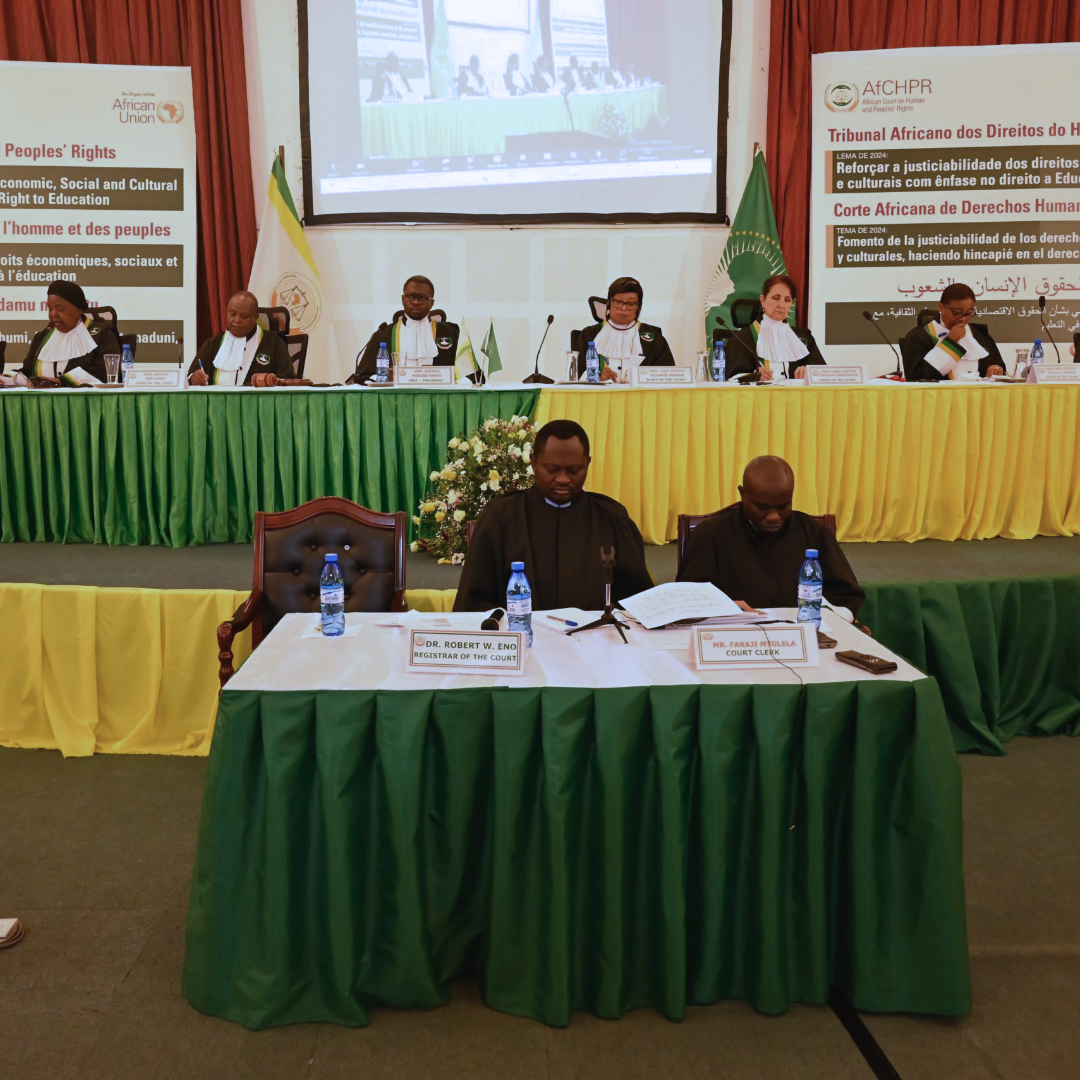
Last year, the Pan African Lawyers Union (PALU), together with African civil society networks such as Resilient40, requested an advisory opinion (AO) from the African Court of Human and Peoples' Rights (AfCHPR) on the obligations of States with respect to the climate change crisis. This becomes the fourth advisory opinion on State obligations in relation to climate change, after earlier advisory opinions from the International Tribunal for the Law of the Sea (2024), the Inter-American Court of Human Rights (2025) and, of course, the International Court of Justice (2025).
Another advisory opinion after one from the ICJ, the world's highest court, might seem surprising at first, as the ICJ AO also applies to all African States. However, the ICJ did not interpret the African Charter on Human and Peoples' Rights, which the African Court will interpret for its advisory opinion, meaning more and region-specific obligations may arise.
As the continent is heavily affected by the climate crisis and experiencing extreme weather events such as droughts and floods, it is important that the obligations to protect the environment and the inhabitants are clear for all countries and that more climate action is taken worldwide. With this advisory opinion, the obligations surrounding permitting extractivist activities will be of particular interest, since these activities are a big income stream, but simultaneously lead to harm to both the environment and the local communities.
Background
WYCJ’s Amicus Curiae Submission
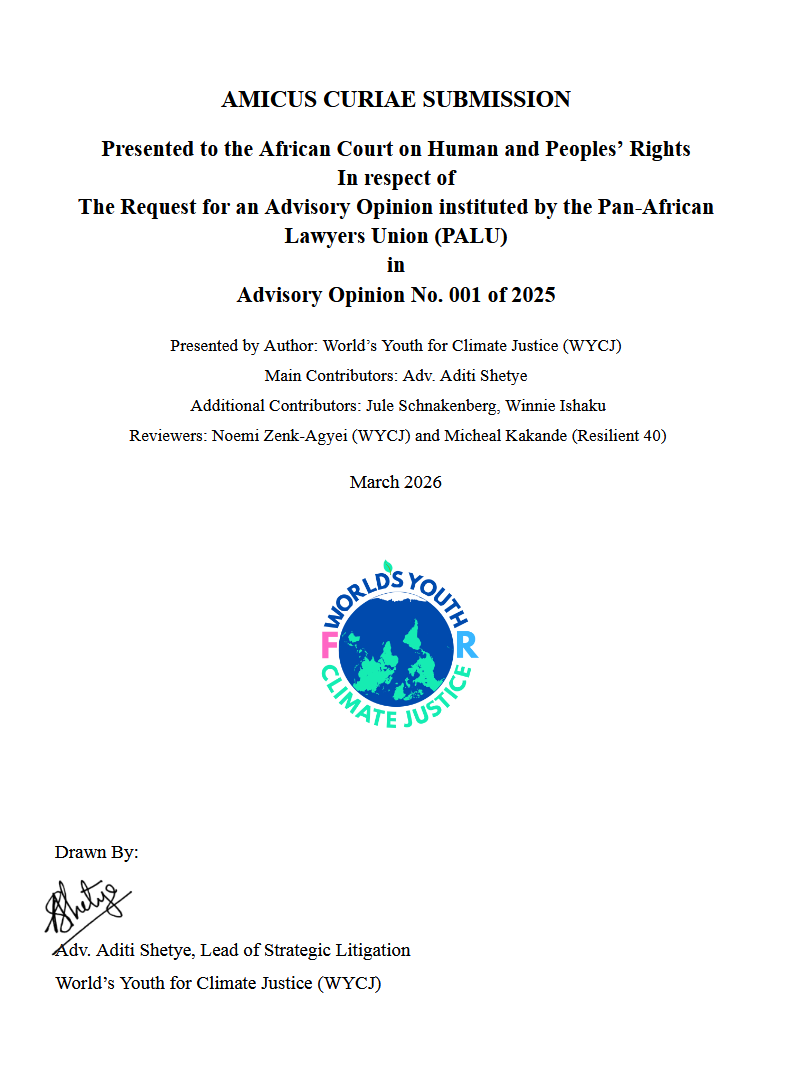
On 30 March, 2026, World’s Youth for Climate Justice has submitted an amicus curiae and an application for leave to participate as amicus curiae to the African Court of Human Rights in which we share our views on some of the questions of the advisory opinion request submitted by PALU.
WYCJ has previously submitted written statements for the Inter-American Court of Human Rights (IACtHR) climate change advisory opinion; advocated for & supported the International Court of Justice climate change advisory opinion; and, supported the advisory proceedings for the climate change advisory opinion from the International Tribunal for the Law of the Sea. This makes us fully equiped to offer the African Court expert submissions on the intersection of intergenerational equity, the rights of current and future generations, and international climate law, including, critically, the protection of environmental human rights defenders, who are among the foremost stewards of the ecosystems upon which future generations depend.
Summary of our amicus curiae
The climate crisis is an intergenerational injustice — and the law must say so.
The right to a healthy environment is a binding law, and Paris Agreement compliance does not exhaust it.
States are legally obligated to regulate corporations causing climate harm, and failure to do so is a human rights violation.
Environmental defenders are legal stewards of future generations' rights, and their protection is non-negotiable.
Africa bears the least responsibility for the climate crisis but the greatest burden, and the law must reflect that.
Where States have failed, full reparations are owed, and money alone is not enough.
Spokespeople
-

Samira Ben Ali
Global Campaigns Lead
For general questions about the AfCHPR advisory opinion:
samira@wy4cj.org -

Aditi Shetye
Strategic Litigation Lead
For questions about our amicus curiae:
aditi@wy4cj.org