World’s Youth for Climate Justice Celebrates Historic ICJ Ruling Affirming Climate Action is a Legal Duty
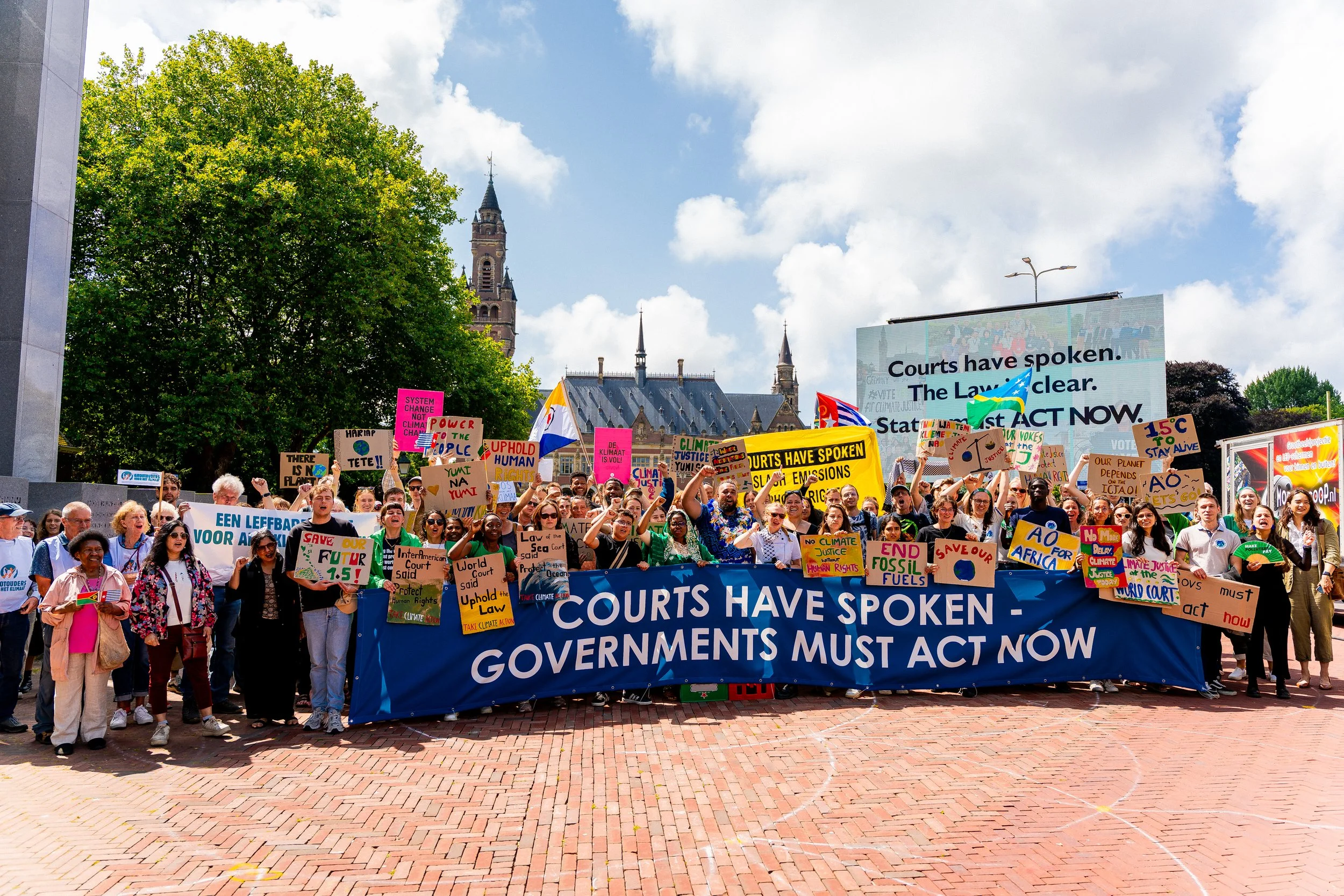
© Holland Park Media
THE HAGUE, 23 JULY, 2025 – The International Court of Justice (ICJ) has delivered its long-awaited advisory opinion on climate change, marking a turning point for international law and a powerful victory for frontline communities and future generations. The Court has confirmed that States, and major polluters, are under a binding legal obligation to take meaningful action to address the climate crisis, protect people, and safeguard the integrity of the climate system.
This breakthrough is the direct result of a youth-led movement that began in the Pacific in 2019 and quickly grew into World’s Youth for Climate Justice (WYCJ) and into a global alliance that united over 1500 organisations. Together, young people around the world have worked tirelessly to put climate justice at the centre of the world’s highest court. Youth were explicitly recognised by States and given the opportunity to address the Court directly, ensuring that the perspectives and demands of young people and frontline communities were heard at the highest level of international law.
Key Findings from the Advisory Opinion:
International Law Demands More Than Voluntary Action: Simply following the Paris Agreement is not enough. The Court says that States have obligations under relevant areas of international law, including human rights, environmental law, and relevant treaty commitments, which must be implemented together and harmoniously.
Clear Legal Duties: The Court confirms that States and major and historical polluters have a clear legal obligation to cut emissions, prevent serious harm, and work together to protect those most at risk, both within their borders and beyond. This duty applies to fossil fuel consumption, extraction, expansion, and subsidies, or a lack of adequate regulation, and extends to States that are not a party to climate change treaties and private entities that operate within their jurisdiction
Best Available Science as the Standard: The Court recognises that decisions must be guided by the best available science, especially reports from the IPCC. The Paris Agreement’s 1.5°C temperature limit is the legal reference point for determining sufficient ambition, action, and responsibility. The decision confirms that “business as usual” is no longer acceptable: States that fail to act, allow high emissions, or ignore the science can now be held internationally accountable.
Human Rights and Climate Justice Go Hand in Hand: Governments are required to protect people’s rights to life, health, a healthy environment, and self-determination. Special attention is required for Indigenous Peoples, Small Island Developing States, youth, and future generations. The right to a clean, healthy and sustainable environment is a precondition to respect, protect and fulfill all other human rights.
Accountability and Remedies: The Court affirms that States with high historical and current emissions have heightened obligations to remedy climate harm, including through reparations, support, and regulation of private actors. The Court makes clear that States can be held responsible for both what they do and what they fail to do. Ceasing conduct causing climate harm might require revoking all administrative measures and policies contributing to such damage.
WYCJ welcomes the ICJ’s decision as a new foundation for global action.
Quotes:
“This is a moment of celebration for the climate justice movement all around the world. The International Court of Justice strengthened our call for climate action. It heard the voices of CSOs and climate vulnerable countries and pronounced that States are legally obligated to protect the climate system whether you are part of any treaty or not. The major polluting countries have to take more responsibility now”. Prajwol Bickram Rana, Asian Front Convenor, Nepal
“The International Court of Justice’s ruling serves as a crucial step toward global climate accountability, emphasizing the urgent need for all nations to act fairly and decisively. This is a win, a global win, that offers hope for vulnerable communities worldwide and grants us a legal foundation for a sustainable and just future as we move ‘Forward, Upward, and Onward, Together’.” Ashawnté Russell, Caribbean Front Convenor, The Bahamas
“ This advisory opinion is historic, and a victory for the all young people and frontline communities who fought for it. It confirms what we already knew: protecting our climate system requires much more than voluntary commitments. In fact, the message from the International Court of Justice could not have been clearer : it is now time for real climate action and most importantly accountability. Tides are turning so starting from now, we will not hold back anymore as our lives depend on it.” Samira Ben Ali, Global Campaigns Lead, France
“This ruling is a testament to the collective power of youth and frontline communities everywhere, including those from Latin America who have been leading voices in the fight for climate justice. The world’s highest court has now said, without question, that protecting people and the planet is not a matter of choice or goodwill, it is morally and legally binding.” Mariana Campos, Latin America Front Convenor, Mexico
“The World’s Highest Court joins in to Hold the Line- climate inaction is no longer tolerated, and climate impunity now carries legal consequences. The law speaks the language of decolonial, intersectional climate justice - affirmed by the Court, carried by the unwavering agency of youth and movement of lawyers who refused to wait. This IS The Power Of The People.” Aditi Shetye, Lead of Strategic Litigaiton, WYCJ’s Global Secretariat.
Background:
World’s Youth for Climate Justice (WYCJ) was created to advance climate justice rooted in human rights and intergenerational equity. The movement for an climate advisory opinion from the World Court began in 2019 with a group of law students from the University of the South Pacific who, facing the existential threat of climate change to their islands, launched an ambitious campaign to bring the issue before the International Court of Justice. Their vision quickly gained global momentum, inspiring the creation of WYCJ and uniting over 1,500 organisations and thousands of young people worldwide. Together, WYCJ has worked to ensure that youth voices are central to international decision-making and that climate justice is recognised as a fundamental legal and moral obligation.
For media enquiries, interviews, or further information, please contact:
Quint van Velthoven, World’s Youth for Climate Justice, quint@wy4cj.org
