Implementation Toolkit
Your one-stop shop for climate advisory opinion implementation resources
World’s Youth for Climate Justice, together with its global and regional partners, is proud to announce the Implementation Toolkit for Climate Advisory Opinions: ICJ, IACtHR, ITLOS & AfCHPR!
As governments, courts, civil society, communities, and advocates begin translating these landmark climate rulings into action, one question remains: what comes next?
The goal of this toolkit is designed to help answer that question. Bringing together thematic briefs, practical guides, advocacy resources, regional analyses, workshop outputs, and expert insights, it serves as a growing hub for implementation, accountability, and climate justice.
More than a publication, this will be a living resource. As new legal developments, case studies, and implementation pathways emerge across global, regional, and national contexts, the toolkit will continue to evolve alongside them.
Consider it your one-stop shop for Climate Advisory Opinion implementation resources.
If you're working on implementation, accountability, litigation, advocacy, or policy related to the Climate AOs, we'd love to hear from you and highlight your work on our Implementation Toolkit. Join us in building this collective resource for climate justice.
Interested in contributing to the Implementation Toolkit?
Email our Global Advocacy Lead Nicole Ann Ponce: nicole@wy4cj.org
Tools for Policymakers and Civil Society Organisations
General Introduction to the Climate Change Ruling by the International Court of Justice
On 23 July 2025, the International Court of Justice (ICJ) delivered its long-awaited advisory opinion (AO) on the obligations of States in respect of climate change. This historic ruling affirmed that States have binding obligations under international law to prevent climate harm, protect human rights, and safeguard present and future generations. The Court also clarified that failures to meet these obligations may trigger State responsibility and legal consequences.
This opinion marks a turning point for the global climate justice movement. It offers new legal tools for accountability, strengthens advocacy in negotiations and policymaking, and provides renewed momentum for campaigns and mobilization worldwide.
The ICJ advisory opinion was a watershed moment, and we are already seeing how it is shaping climate action. Yet key questions persist: Why does this matter? What does it mean for frontline communities? How does it respond to the realities of families forced to relocate after each cyclone, or to those whose homes are lost to floods that could have been prevented or mitigated? While the ruling provides critical legal clarity, it alone is not sufficient to protect coastal villages from rising sea levels.
The challenge before us is no longer interpretation, but implementation. Its operationalisation is essential to ensure that it is not treated as optional guidance but instead shapes real-world decisions, policies, and actions. In this context, the UN General Assembly resolution on the ‘Advisory Opinion of the International Court of Justice on the Obligations of States in Respect of Climate Change’ led by Vanuatu can play a key role in translating the Court’s legal findings into political momentum, institutional follow-up, and concrete pathways for implementation.
At the same time, the ICJ climate ruling does not stand alone. A broader and evolving body of international jurisprudence is emerging, setting out clearly States’ obligations in the face of the climate crisis. This includes advisory opinions from the Inter-American Court of Human Rights, the International Tribunal for the Law of the Sea, and the forthcoming opinion from the African Court on Human and Peoples' Rights.
The advisory opinions should be read altogether as part of an emerging and coherent body of international law. Taken together, the opinions of the International Court of Justice, Inter-American Court of Human Rights, International Tribunal for the Law of the Sea, and the forthcoming opinion of the African Court on Human and Peoples' Rights reinforce and complement one another across legal regimes – international environmental law, human rights law, and the law of the sea. Interpreted through the lens of systemic integration and harmonisation, they collectively clarify that States’ obligations in addressing climate change are interdependent, mutually reinforcing, and grounded in a unified framework of international law. This requires policymakers, courts, and advocates to move beyond fragmented approaches and instead apply these opinions in a coordinated manner, ensuring that climate action, human rights protection, and environmental governance are pursued in a consistent, legally coherent, and mutually supportive way.
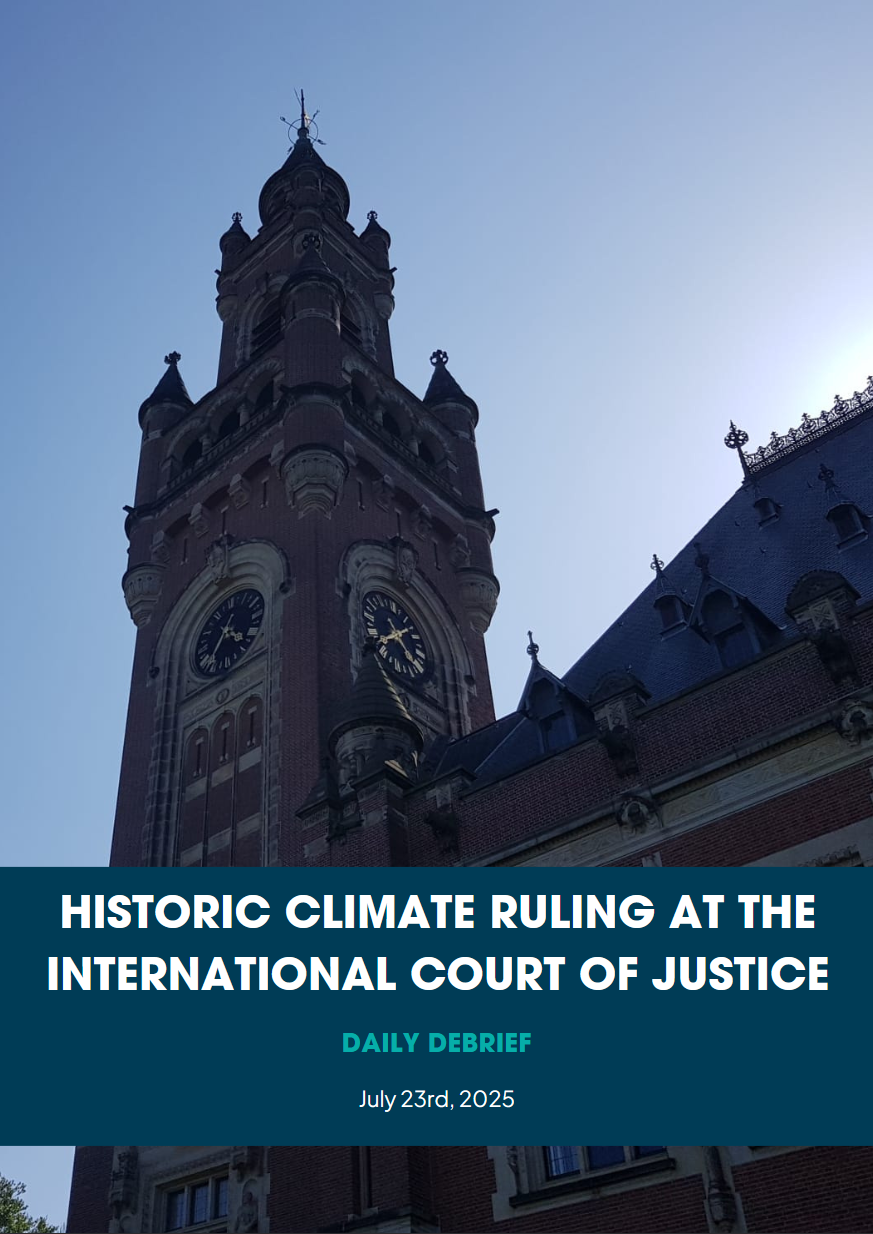
Key Findings of the Court: Daily Debrief
To socialise the technical and legal oral arguments by States and intergovernmental organisations, a small team coordinated by legal experts from WYCJ and CIEL working with a few public international lawyers from the AO Alliance carried out a top-line analysis of the arguments at the end of each day of the oral hearings and after the delivery of the ICJ advisory opinion.
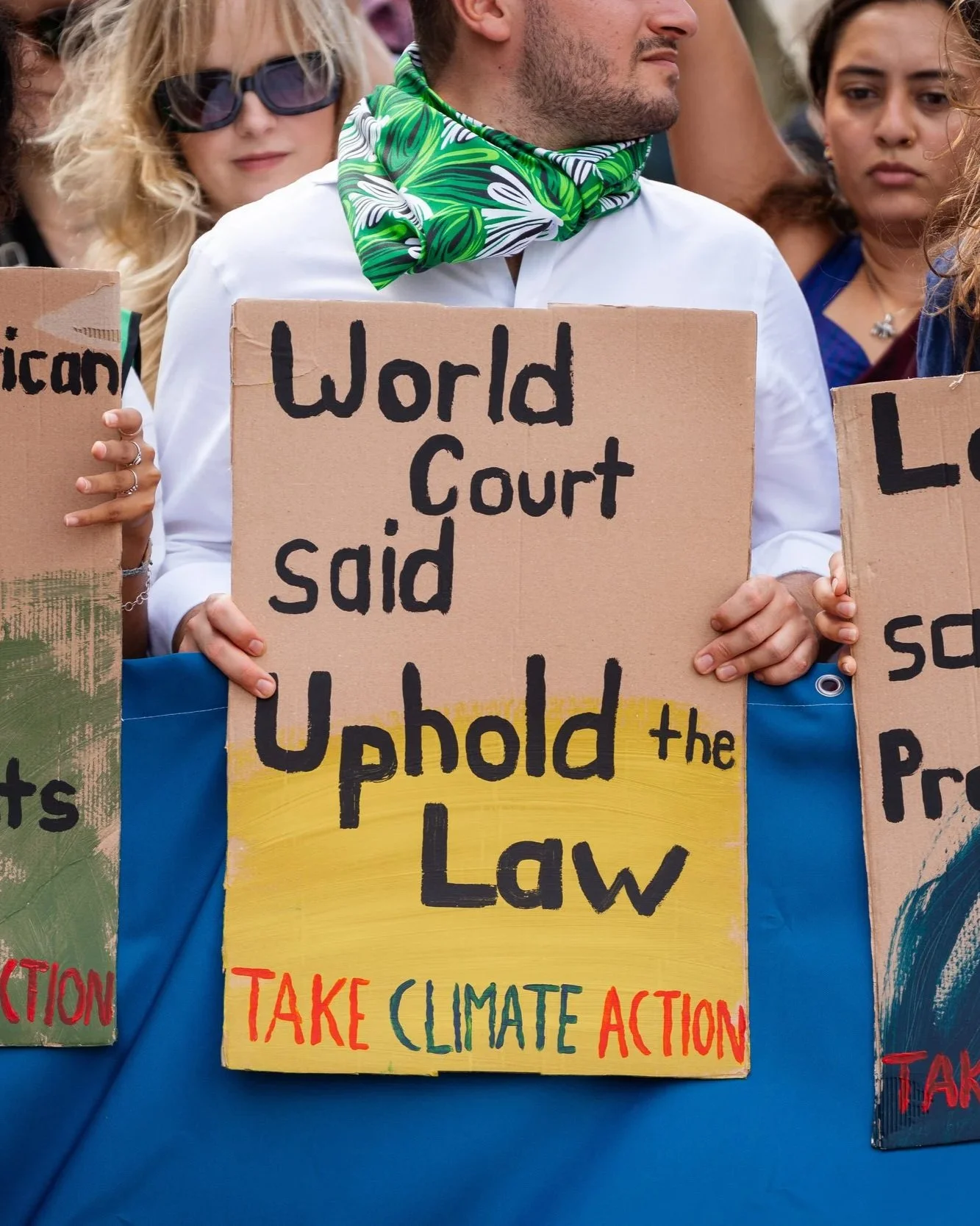
ICJ Advisory Opinion on Climate Change: What's next?
This briefing note from WYCJ identifies next steps for the implementation of the ICJ’s ruling on a national level.
Integration into the UN ecosystem and processes: Implications for the climate change negotiations – COP and beyond
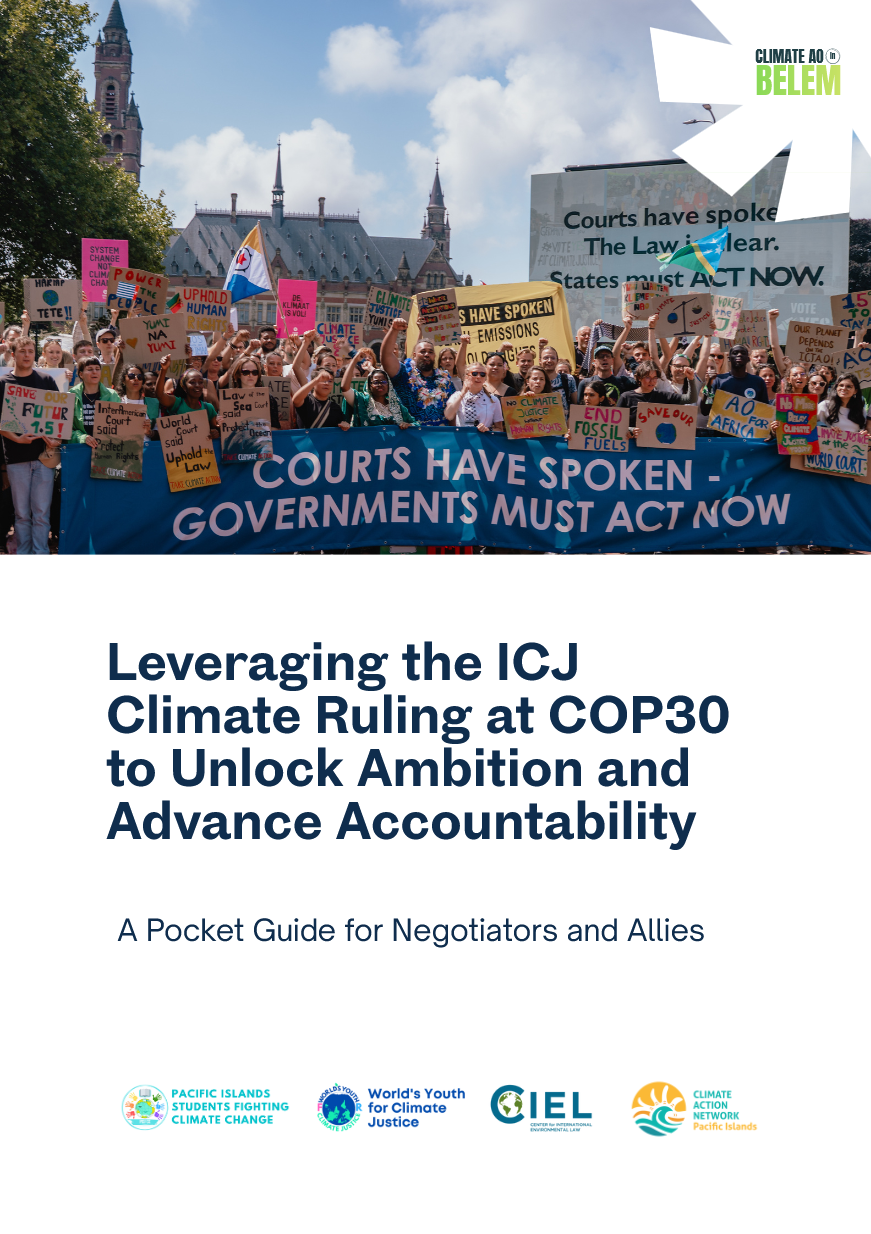
Pocket Guide
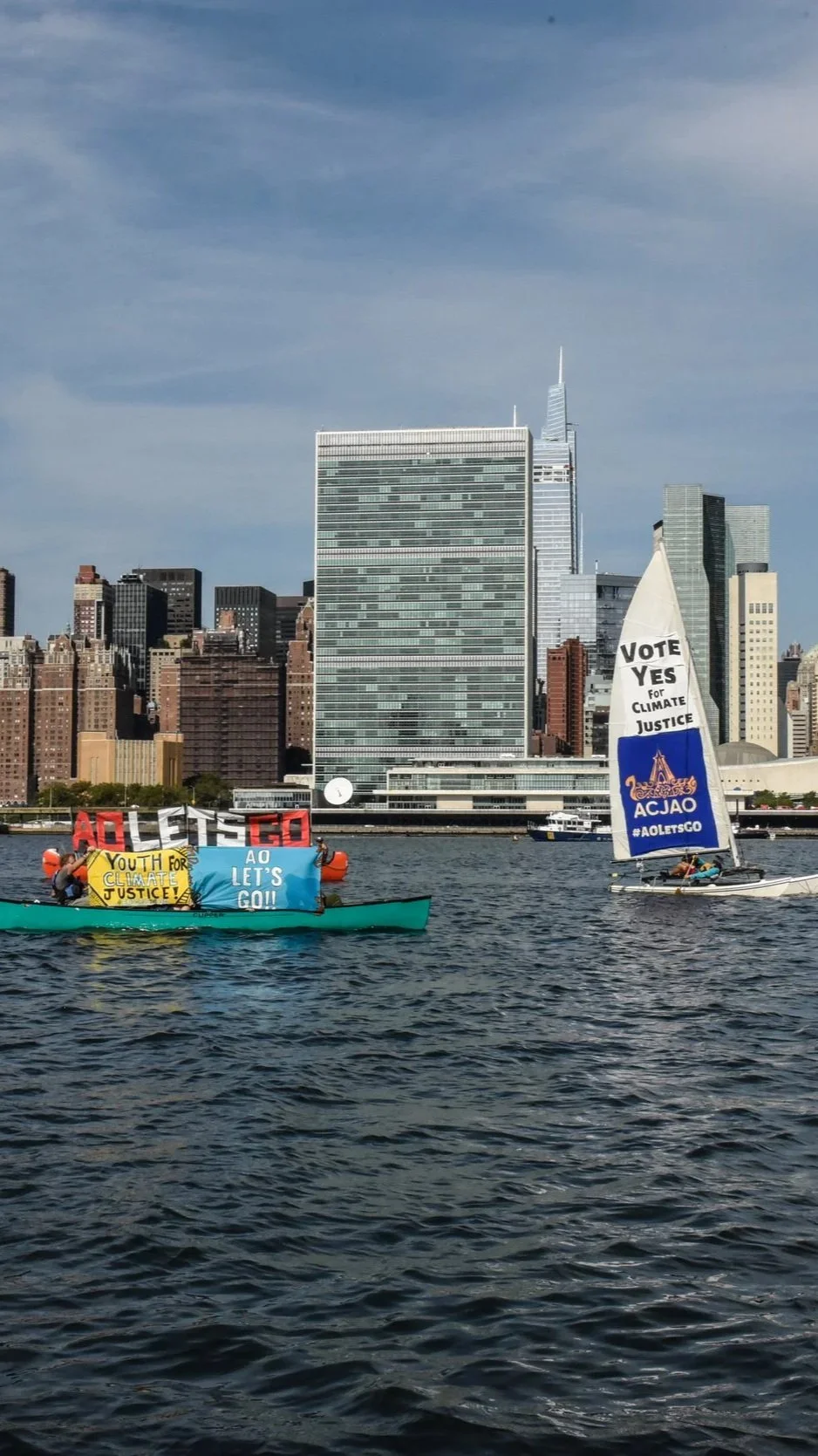
UNGA Resolution Advocacy Package
Since States had to make the decision to co-sponsor the UNGA resolution, it was of utmost importance that we all shared with rest of the world and our government representatives that the groundbreaking climate change advisory opinion from the ICJ must be fully endorsed by adopting the strongest possible resolution for the planet and its people.
WYCJ co-created the Advocacy Package that came with useful resources such as a Template Letter that could be sent to State representatives to co-sponsor the resolution and a Social Media Package with useful graphics and captions to inform and engage your audience.
Thematic briefs
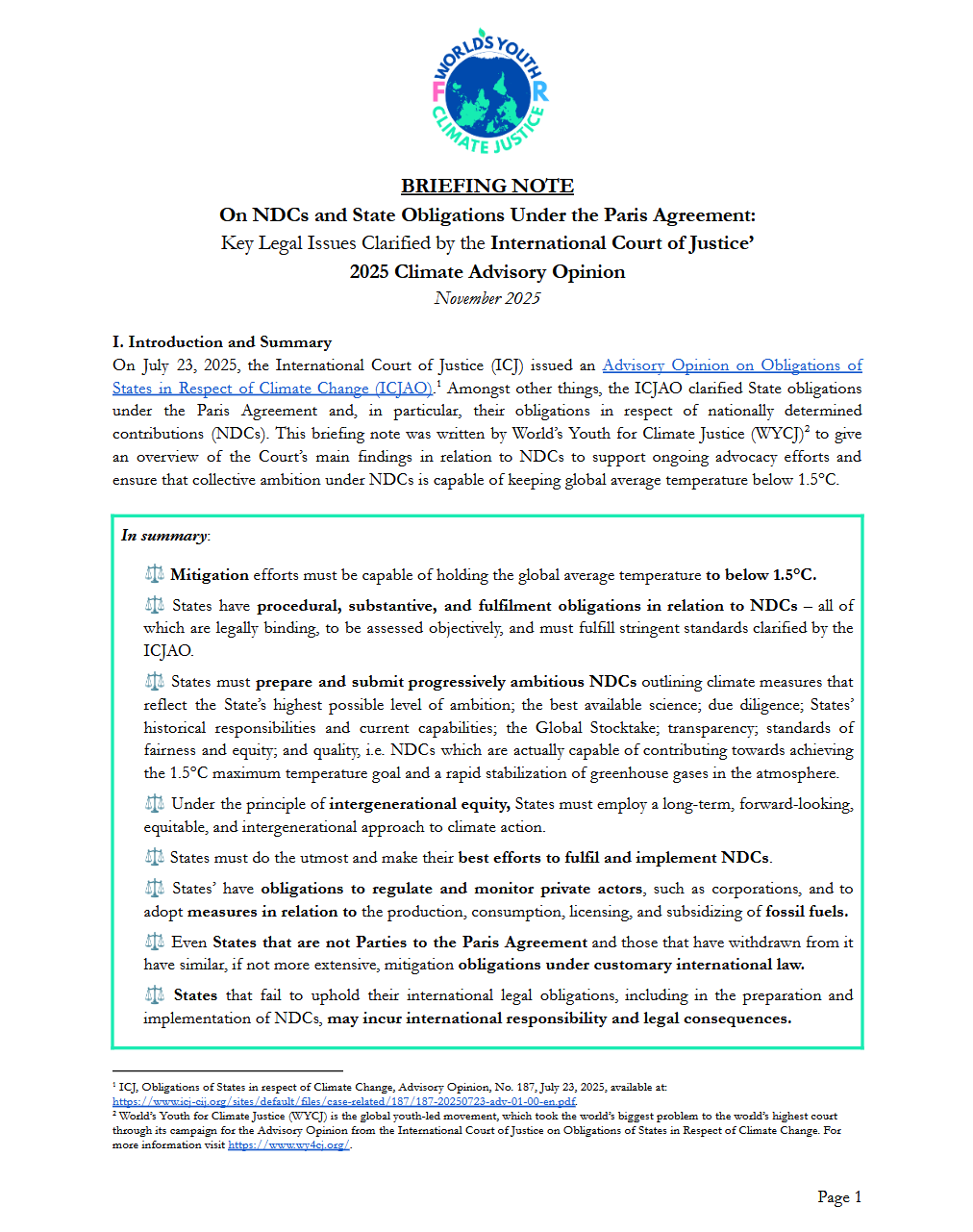
Briefing Note on NDCs and State Obligations Under the Paris Agreement: Key Legal Issues Clarified by the ICJ AO
This briefing note created by World’s Youth for Climate Justice gives an overivew of the ICJ’s main findings in relation to Nationally Determined Contributions (NDCs) to support ongoing advocacy efforts and ensure that collective ambition under NDCs is capable of keeping the global average temperature below 1.5°C.
Amici curiae
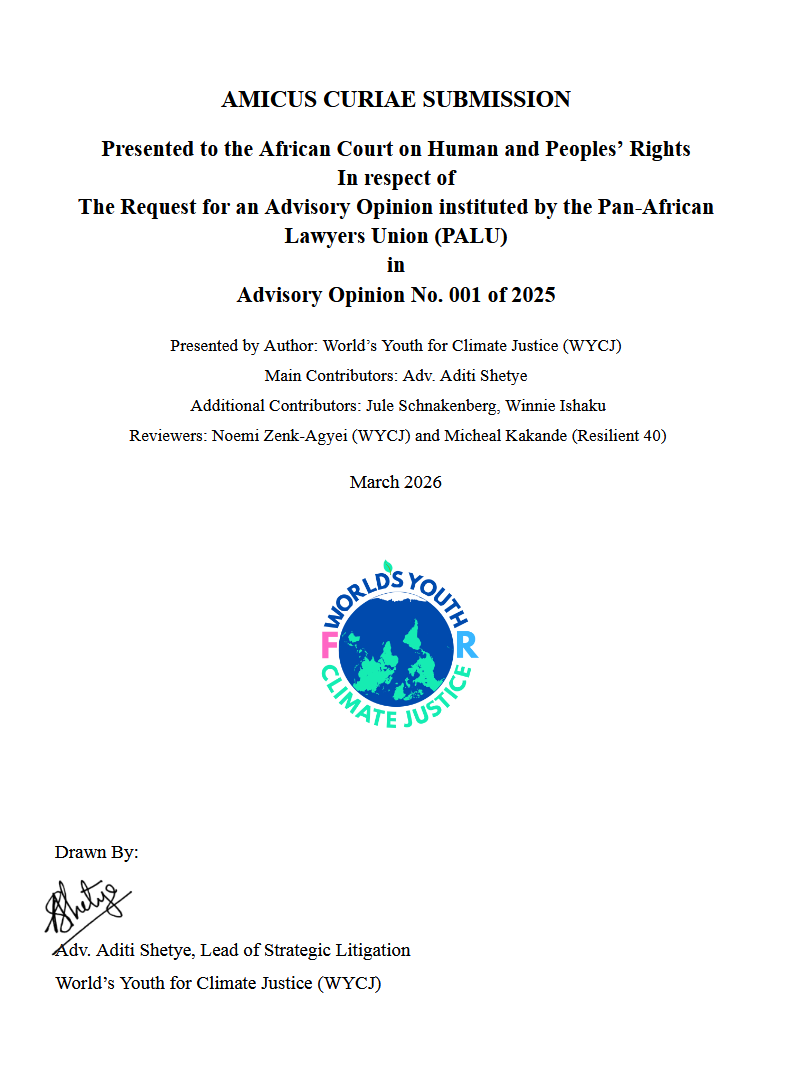
Briefing Note on NDCs and State Obligations Under the Paris Agreement: Key Legal Issues Clarified by the ICJ AO
On 30 March, 2026, World’s Youth for Climate Justice has submitted an amicus curiae and an application for leave to participate as amicus curiae to the African Court of Human Rights in which we share our views on some of the questions of the advisory opinion request submitted by PALU.
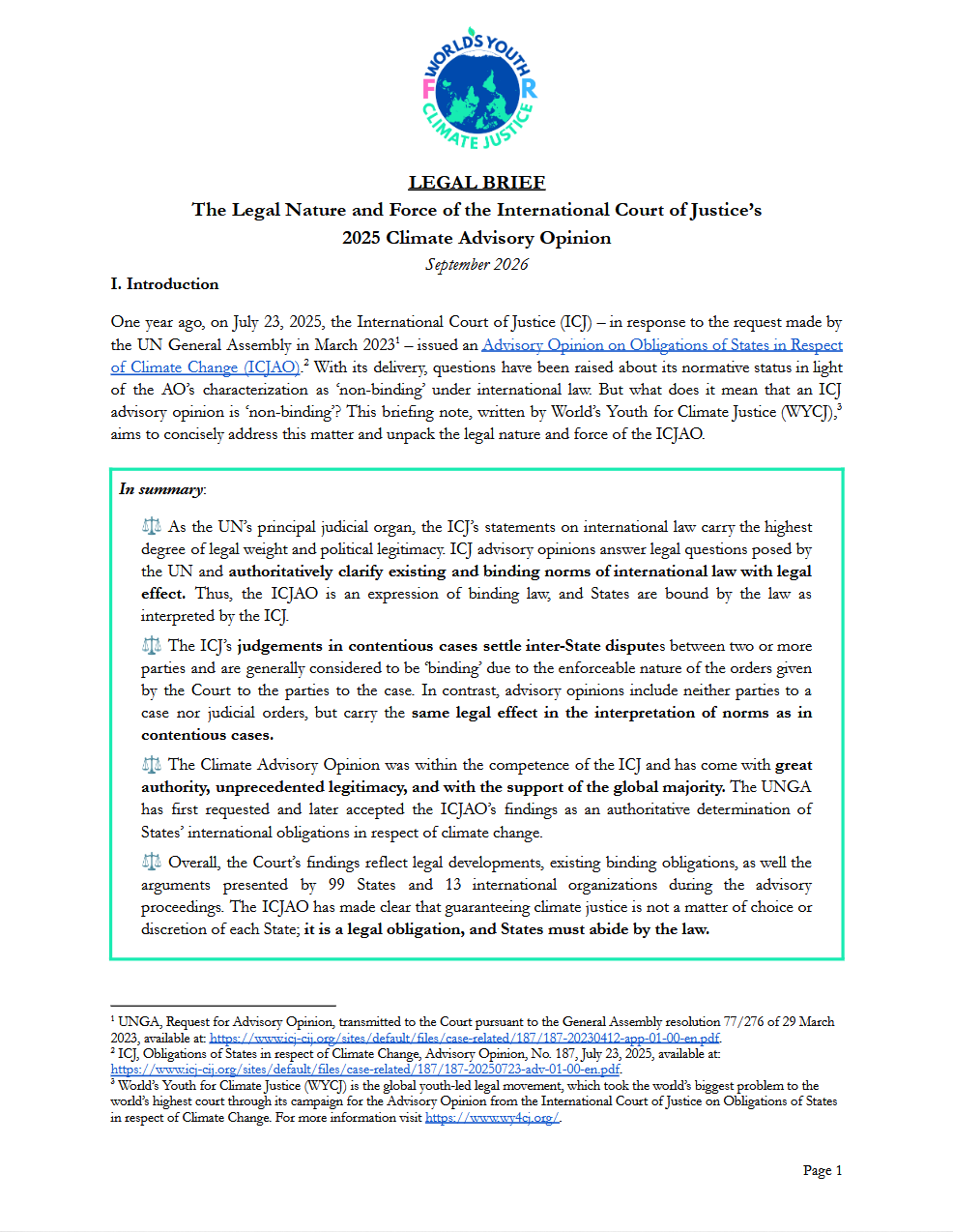
The Legal Nature and Force of the International Court of Justice’s 2025 Climate Advisory Opinion
This briefing note created by World’s Youth for Climate Justice aims to concisely address the AO’s characterisation as ‘non-binding’ under international law and unpack the legal nature and force of the ICJAO.
Litigation Notes
Following the landmark climate advisory opinions from the International Tribunal for the Law of the Sea and the Inter-American Court of Human Rights, the ICJ has provided exceptional clarity regarding the scope and content of States' duties under international law in the context of the climate crisis. This clarity has the potential to enhance and inform ongoing climate cases substantially and future claims before domestic, regional, and international courts. Climate cases are on the rise, with over 3000 filed to date. To assist litigators in integrating relevant climate justice-aligned ICJ AO findings in their case work, an initiative is being undertaken by legal practitioners deeply engaged in the advisory proceedings to develop a compendium of structured "litigation notes digest" on topics prominent in the opinion, potentially including, inter alia, due diligence, prevention of significant harm to the environment, corporate accountability, sea level rise, remedy and reparation for climate harm, and the right to self-determination, to support lawyers litigating those topics. By creating tools for litigators to use in court, we can put the ICJ AO into practice as a step toward meaningful change.
The Objective for the Litigation Toolkit:
Facilitate the strategic deployment of the ICJ AO as a legal benchmark to reinforce climate justice-oriented arguments before courts across jurisdictions
Foster a clear understanding of the ICJ AO in terms of how its findings fall within the jurisprudential landscape, including the climate advisory opinions from the Inter-American Court of Human Rights and the International Court of Justice.
Entrench the positive normative content of the ICJ AO in binding judicial and quasi-judicial precedents across fora, read in light of other relevant case law.
Bolster legal arguments on a wide range of topics to strengthen the power of the law to hold polluters accountable and secure remedies and reparations for climate harm.
Strengthen transnational litigation collaboration and support.
[In a second phase of the project, where we adapt the litigation notes to more specific jurisdictions] explore jurisdiction and target-related strategic considerations, including those involving corporate actors, while also assessing associated risks.
Regional briefs
This is a compilation of regional convenings or workshops aimed at “unpacking” the implications of the ICJ AO to enable its implementation and operationalisation in regional and national contexts. This section is an evolving compendium of outcome documents that may take the form of recommendations, policy briefs, or concrete next steps as we continue to implement it.
Advisory Opinion to Action: Advancing Human Rights and Climate Justice
This summary identifies a set of priority actions aimed at advancing the implementation of the AO across governance levels, from domestic legislation and regulatory frameworks to regional cooperation within ASEAN and broader international advocacy. This can provide a roadmap for targeted legal, health, policy, and capacity-building initiatives that can support the operationalization of the AO across the region.
ICJ AO Frequently Asked Questions (FAQ)
-
The advisory opinion did not create new legal obligations. Rather, it is the most authoritative interpretation of existing binding international law by the world's highest court.
It is often described as "non-binding" because, unlike a judgment in a contentious case between two States, it does not itself impose new legal obligations. Instead, the Court clarified what international law has long required of States under climate treaties, customary international law, human rights law, and the law of State responsibility.
The obligations clarified by the Court are binding, and they apply broadly to States. The advisory opinion therefore provides an authoritative legal framework that governments, courts, advocates and international institutions can rely on when implementing and enforcing existing international law.
-
No. The advisory opinion complements and strengthens existing international climate processes rather than replacing them.
The Court confirmed that the UNFCCC and the Paris Agreement remain central pillars of international climate law, while also clarifying that they operate within a broader body of international law, including international human rights law, customary international law, and the law of State responsibility.
After more than 30 years of climate negotiations, the advisory opinion helps clarify what States are already legally required to do and provides additional legal guidance to support implementation. It reinforces multilateral efforts by helping bring climate action in line with existing legal obligations rather than creating a parallel system.
-
Climate litigation is not the objective of the advisory opinion, nor is it a new phenomenon. Thousands of climate cases have already been filed worldwide, and courts are increasingly recognising that climate action is a legal responsibility of governments. The advisory opinion strengthens the legal foundation by clarifying States' existing obligations.
Litigation should remain a measure of last resort. It is a healthy and important feature of democracy and the rule of law that governments can be held accountable when they fail to comply with their legal obligations.
More broadly, the costs of unchecked climate change are significantly greater than the costs of mitigation and adaptation. Implementing existing obligations reduces climate risks, economic losses,and legal uncertainty over time.
-
The focus has shifted from obtaining the advisory opinion to implementing it. Governments, international organisations, courts, civil society, academics, litigators and frontline communities are now working to integrate the Court's clarification of international law into national legislation, domestic litigation, international negotiations, public policy, and advocacy.
The Global AO Festival showcases examples of this implementation from around the world and aims to accelerate this momentum.
-
Yes. As the principal judicial organ of the United Nations, the International Court of Justice provides the most authoritative interpretation of international law. Courts, governments, UN bodies and advocates around the world routinely rely on ICJ advisory opinions when interpreting and applying international law.
One strength of an advisory opinion is that it clarifies legal obligations applicable to all States, rather than only the parties to a particular dispute. Its influence therefore extends far beyond any single case and helps guide implementation, policymaking, negotiations, and future litigation worldwide.
-
For the first time, all 15 judges of the International Court of Justice unanimously clarified States' legal obligations regarding climate change under international law. The Court confirmed that climate action is not simply a matter of political choice or voluntary commitments. States have binding obligations rooted in climate treaties, customary international law, human rights law and other sources of international law to prevent significant harm, protect human rights, cooperate internationally, and exercise due diligence in responding to climate change.
By clarifying these obligations, the Court has provided an authoritative legal roadmap for climate action and accountability.
-
The advisory opinion is not the finish line, it is the starting point.
The Court has clarified what international law already requires. The challenge now is implementation: integrating the advisory opinion into national laws and policies, international negotiations, litigation, advocacy, and public decision-making. The question is no longer what the law is, but how we use it to accelerate climate justice and accountability.