The ICJ AO and UNFCCC Negotiations: Using the ICJ AO to Elevate Climate‑Justice Narratives in UNFCCC Spaces
written by Theresa Amor-Juergenssen
On 23 September, 2026, World’s Youth for Climate Justice (WYCJ) together with the Youth Negotiator’s Academy (YNA) hosted an online workshop on the ICJ climate advisory opinion (ICJ AO) and UNFCCC Negotiators.
Using the momentum provided by the ICJ AO and ahead of COP31, this intensive online workshop provided a practical discussion of how the ICJ AO can be used to strengthen climate justice narratives in UNFCCC negotiation spaces. Hosted and facilitated by experienced negotiators and lawyers from WYCJ and YNA, the workshop brought together young people from around the world who are interested in climate negotiations to strengthen their understanding of both negotiation spaces and the legal obligations clarified and reaffirmed by the ICJ advisory opinion on climate change.
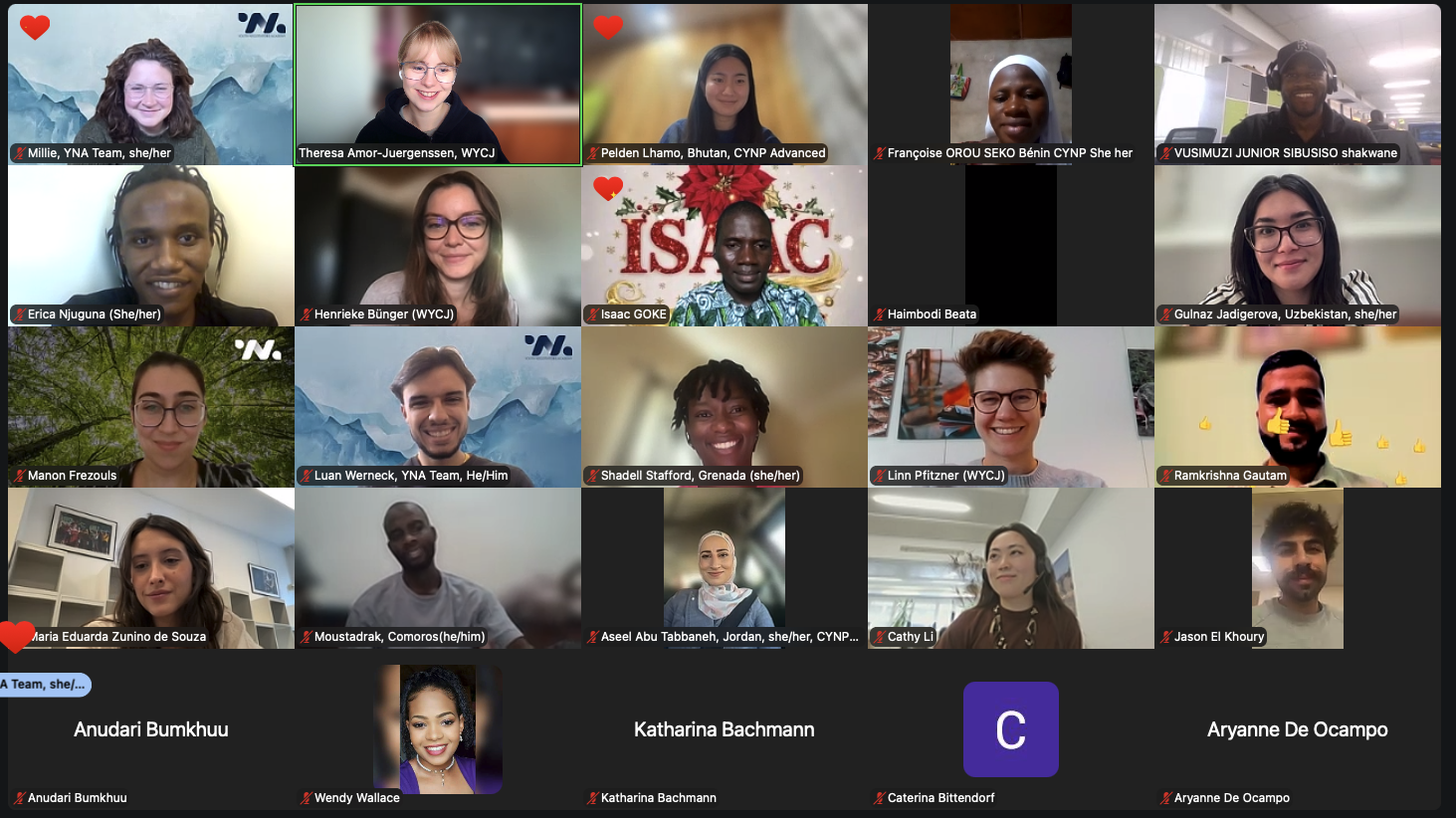
YNA’s young negotiators provided an introduction to the UNFCCC negotiation processes and practical insights into what it is like as a youth negotiator at COPs. To that end, they gave practical advice on timetables, terminology used, and how to interact with the processes in and outside the formal negotiations. WYCJ’s team provided an overview of some of the main findings of the ICJ within the advisory opinion and on the work that now needs to be done in order to implement the ICJ AO and achieve compliance with international law. In particular, WYCJ focused on how the ICJ AO can be used within UNFCCC negotiations and provided some practical exercises to facilitate learning and invite attendees to share their own experiences and ideas.
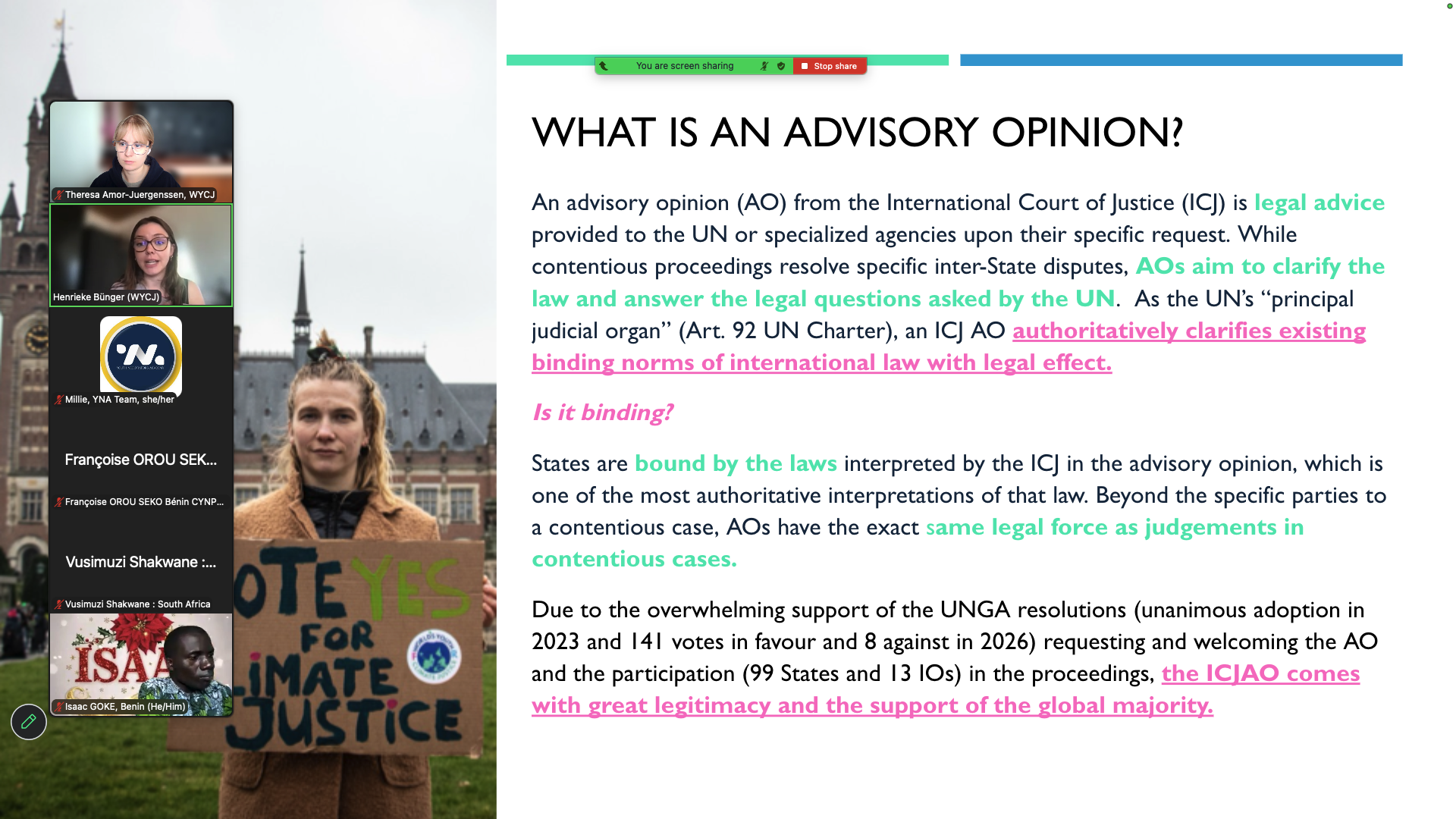
Overall, we worked together to understand how the law can be used as a powerful tool to advance climate justice within UNFCCC negotiations and has the potential of creating sustainable and effective change for present and future generations.
